 Photo 1
All of the images shown are perfect candidates for the static mount process, from top to bottom: silk painting; Ilfochrome Classic opaque white film; Kodak Duratrans clear film; Ilford clear polyester film; Kodak Day and Night clear film.
Static mounted...and still together after all these years. The dependable thing about static electricity is that it never really goes away, and although it may very well be a detriment when attempting to clean acrylic glazing, it is a huge attribute when using static as a bonding agent. In fact this totally reversible, noninvasive process may be used to mount a plethora or polyester photos and silk materials (photo 1).
Photo 1
All of the images shown are perfect candidates for the static mount process, from top to bottom: silk painting; Ilfochrome Classic opaque white film; Kodak Duratrans clear film; Ilford clear polyester film; Kodak Day and Night clear film.
Brief Cibachrome Introduction
Commonly referred to as a cibachrome, static mounting has been favored for mounting museum framed Ilfochrome Classics for over twenty years. The 100% polyester based photograph was developed by Ilford Photo Corporation and uses a permanent silver dye bleach technology which incorporates azo dyes within the emulsion during the printing process. Unwanted dyes are bleached away leaving the correct azo colors behind. This is what gives cibachromes their superior color saturation, sharper contrasts, image stability, and less light sensitivity.
The "Deluxe Glossy" film is an opaque white polyester base that is 7 mils thick coated on the back with a matte gelatin layer. The 100% polyester base makes the photo more dimensionally stable (doesn't expand nor contract much), while the gelatin equalizes the surface tensions making them lie very flat. Other Cibachrome print materials using the same azo dye process include resin coated (RC) paper base as a semimatte "Pearl" or "Glossy" finish, and as clear transparency films. It needs to be stressed that for the purposes of this article the 100% polyester the only photos that bond using the static process.
Ilfochrome Classics are highly susceptible to surface damage caused from fingerprints, scratches and moisture. And unlike traditional RC photos may not be repaired once damage has occurred. Always wear cotton gloves, and for this process anti-static gloves or cleaning rags should be avoided. Never brush or wipe the surface with towel or tissue, and never use chemicals of any kind on the surface. Once damaged...replacement is eminent.
The Problem
There are two huge problems when framing a cibachrome, orange peel and static electricity (photo 2). Prints are flat, floppy, everything is attracted to them, and because they are film they may not be mounted like a typical photo. Images over 16x20" may buckle from their own weight if placed in corner pockets. Edge strips surrounding the photo may hold it at the edges, but could still allow the polyester to be sucked into the mat window from exterior room static. Hinging can also allow puckering or warping of the photo into the mat window.
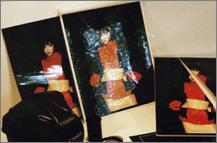 Photo 2: Orange Peel
The unmounted Ilfochrome on the left shows a smooth glassy reflection, the lumpy or dimpled reflection on the image center is known as orange peel. This sampler was mounted with pressure-sensitive film left half, dry mounted right half (diagonal division through middle).
The natural static created when a facing sheet is pulled from an acrylic sheet makes for a prefect mounting substrate. Static holds to the acrylic without orange peel, so why not let the very problem become the solution (photo 3).
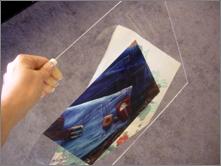 Photo 3: Static Cling
The sheet of blue plastic film has been removed from the sheet of Cyro acrylic and a Duratrans film is statically mounted to the front while a Chinese silk painting is clinging the back. Use the problem to become the solution.
Mounting Options
There are numerous mounting options for photos, but the glass-like surface finish of cibachromes allows then to vividly show any substrate irregularities. Since all substrates have some degree of surface unevenness...spray, pressure-sensitive, and dry mounting all show some level of orange peel once the photo has been affixed to it. Only static mounting or hinging retain the smooth, flat, high gloss beauty that sets cibachromes apart from other photos.
Clear acrylic is the substrate required for static mounting (photo 4). This is the same acrylic used as glazing for oversized framing and when a glass substitute is required. There are numerous manufacturers who produce these cast or extruded sheets of poly(methyl methacrylate) known as PMMA. Plexiglas was introduced by Rohm & Haas of Germany in 1936. Other common trade names include Perspex, Acrylite and Lucite. It is rigid and moderately resistant to chemicals, light, ozone, and biological degradation.
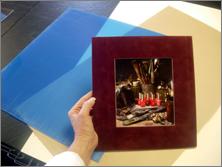 Photo 4: Static Mounted Ilfochrome Classic
The static mounted photo is matted with a Moorman suede mat that has been overlapped ¼". Behind the hand held photo is Cyro Blue Film Mask acrylic, Plexiglas Paper Masked (.118) acrylic and Creme Alpharag board.
Another polymer used occasionally for glazing is a polycarbonate known as Lexan, first developed in 1953. It is durable, rigid, scratch resistant, and dimensionally stable yet has limited resistance to UV radiation and chemical damage. Though also used as a glazing alternative, Lexan polycarbonate does not appear to be a good substitute for PMMA when static mounting.
The Process
Cut a sheet of acrylic the outside dimension of the window mat. Measure and mark the window mat borders and score through the surface paper into the acrylic sheet with a sharp blade. Peel the paper or film coating from the center cut section surrounding the photo do not remove the entire sheet. Position the cibachrome onto the acrylic allowing the static to hold it in place. Since the static is what actually holds the image to the substrate it is important that maximum static be present during the positioning of the photo, so peel the paper and immediately position the photo. Do not allow a great deal of open time for duct and dirt to be attracted to and stick to the exposed acrylic.
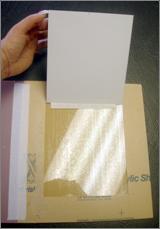 Photo 5: Flange Hinge
A flange hinge of neutral pH tape is placed across the top to prevent the photo from slipping.
For photos that are to be exhibited at numerous locations, shipped, or may be frequently transported it is a good idea to place lower corner pockets or a flange hinge across the top edge of the photo (photo 5). Since polyester does not absorb, use of neutral pH pressure-sensitive tape is acceptable as this top hinge. The remaining paper liner on the acrylic serves as a small sink mat which will hold the photo in place on smaller pieces under 11x14" with no reinforcement (photo 6). The sampler shows the top mat book hinged to the acrylic substrate, which assist in alignment, but it is advised to use a bead of white glue to cement the mat directly to the remaining paper backing (photo 7).
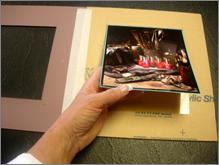 Photo 6: Hinged Window
This sample features a book hinged window mat (along left side). This works well for correct placement, but the actual mat should also be glued to the acrylic paper cover inside.
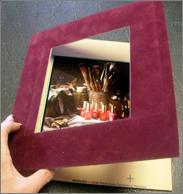 Photo 7: Sink Mat
The paper liner on the acrylic serves as a small sink mat to hold the photo in alignment on small pieces under 11x14". The top mat will help keep it in place.
The top mat should overlap the photo a little more than normal with at least ¼" on small photos, but ½" on photos larger than 16x20". Since Ilfochrome Classics often have a ¼" black border at their outer edge, the additional overlap does not subtract much from the image. Using this static method will keep the center of the photo drawn back against the acrylic without being sucked into the window by static created in a room.
The only way to break a static mount is to lift the photo from the acrylic substrate. Once the frame is complete the static will remain until it is dismantled. If a large cibachrome is to also be glazed using acrylic because of glazing weight, it is imperative the static draw remain dominant toward the backing. Allow a wide space between the top mat and the glazing, with 1" an optimum distance. Framespace 5 would be a perfect commercial spacer for this, plus a deep rabbet will be required.
Other Static Applications
As shown in the opening photo there are other polyester images that may be mounted using the static method. Kodak Day and Night Display Film, Ilfochrome Classic Clear Display Film, and assorted silk fabrics may also be mounted using static as the adhesive (photo 8). The clear Kodak and Ilford films have the required translucency designed for illumination from behind, like a fast food menu or movie marquis. There is no opaque layer as with the white of an Ilfochrome Classic so the image is lightly visible from the back.
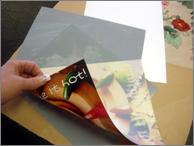 Photo 8: Other Possibilities
The clear Kodak and Ilford films (front) have a translucent quality that are meant to be used with illumination from behind, like a fast food menu or movie marquis. Notice the image is lightly visible from the back as there is no opaque layer as with the white opaque Ilfochrome Class under them.
Since clear films need to have light passing through them they are better suited to face mounting where the film is adhered to the back of the acrylic sheet with a clear high tack pressure-sensitive adhesive rather than statically mounting it to the front (photo 9). Watch for an upcoming PFM article on the application of face mounting using a roller machine.
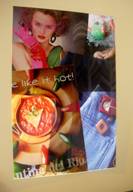 Photo 9: Clear Films
For explanation, the four featured films have been statically floated on an acrylic sheet, matted, and placed in front of a window for viewing. Upper left is the opaque Ilfochrome, lower right is the discussed clear Kodak Duratrans, which is designed to be backlit.
Static for Silks
Flat or raw ragged edges are the best for this technique. A great additional use for the static mounting technique is with silk scarves and silk paintings (photo 10). The silk painting is shown statically adhering to a clear acrylic sheet, the same as is used for cibachromes. Though silk scarves are also likely candidates, a rolled hem around the outside edge of a scarf can be too bulky for this method (photo 11).
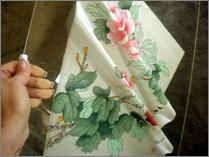 Photo 10: Static for Silks
The deliberately bunched silk painting is shown statically adhering to a clear acrylic sheet when held perpendicular two feet off the floor. The ragged silk edge makes this technique perfect.
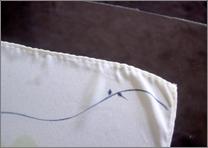 Photo 11: Hemmed Silk Scarf
The hemmed scarf creates natural puckers in the edges that will always somewhat show when static mounting.
The static method does not allow for stretching or taut pulling of a fabric, leaving natural warping of a hemmed scarf a problem under the edge of a mat (photo 12). Use of lacing or a pressure stretching would be the preferred method. Pressure stretching is tucking of the edges of the painting around a straight blunt cut edge of a foam center or museum board fallout then refitting it back into the window creating a pressure hold (see "Silk Paintings" May 2005). As for a flat painting, static mounting is perfect. It is neutral pH, totally reversible and noninvasive. Plus the clear acrylic substrate allows for a colored backing to be placed beneath the acrylic to help color tint or better maintain the color of the silk original (photo 13).
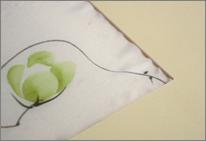 Photo 12: Puckering
This puckering beneath the mat is somewhat unavoidable, lacing or a pressure stretching would be preferred methods. See "Silk Paintings", May 2005.
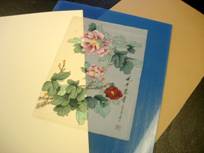 Photo 13: Clear Backings
The painting sits on top of clear acrylic. Creme mat board (L), blue and brown covered acrylic(R) show color tinting possibilities.
Though static will hold the painting where placed, as mentioned above it cannot stretch or flatten silk (photo 14). Any existing warping, buckling or creasing should be pressed out of the painting prior to using the static method. As seen in the photo, buckles in the painting that will not flatten will remain visible using static mounting, and if this is not flat enough consider another mounting method (photo 15).
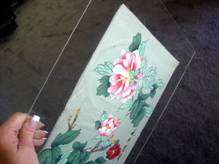 Photo 14: Flattened But Natural
Static holds the silk exactly where placed, but cannot stretch the painting to flatten.
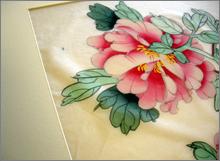 Photo 15: Creases and Buckles
Any existing warping, buckling or creasing should be pressed out of the painting prior to using the static method. There is a piece of créme mat behind the acrylic to maintain silk color.
Color Tinted For Framing
Selecting the right color to place behind the acrylic controls the color tint the painting (photo 16). In order to achieve this control with other mounting methods one would select a clear dry mount film, clear spray, or pressure-sensitive film. Though any of these methods would totally flatten the art, they would all leave residue in the silk. Another problem that can occur is the bleeding or seeping through of an adhesive because of the thin silk and wide woven fibers. This may be seen as a shiny appearance between silk threads.
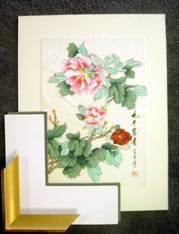 Photo 16: Color Tinted and Ready to Frame
Selecting the right color to place behind the acrylic will tint the painting to maintain its original color or showcase a new color.
Static Afterthoughts
Static mounting is a totally reversible, neutral and preservation sound method for framing Ilfochrome Classics, silk paintings, scarves, Duratrans film, or anything that creates or reacts to static charges. Yes, static may leave white cat hair on your black slacks, but it can also maintain the beautiful glassy surface that makes an Ilfochrome Classic...well, a cibachrome! As it turns out, static can be a wonderful thing.
END
Copyright © 2006 Chris A Paschke
For additional reading on static mounting Mastering Mounting:
"What To Do With Ilfochromes" October 1992;
Static Mounting Ilfochrome Classics, February 1997; and
The Mounting And Laminating Handbook, second edition, pgs. 67-68.
For more articles on mounting basics look under the mounting section in Articles by Subject.
Additional information on all types of mounting is found in:
The Mounting and Laminating Handbook, Second Edition, 2002,
The Mounting And Laminating Handbook, Third Edition, 2008 and
Creative Mounting, Wrapping, And Laminating, 2000 will teach you everything you need to know about getting the most from your dry mount equipment and materials as an innovative frame designer.
All books are available from Designs Ink Publishing through this website.
Chris A Paschke, CPF GCF
Designs Ink
Designs Ink Publishing
840 Tucker Road, Suite H-190
Tehachapi, CA 93561
P 661-821-2188
chris@designsinkart.com