This is the first in a series of columns on float frames specifically targeting the ones best suited to encaustic art panels and boxes. Over the next few months I will cover specific profiles, mounting methods, traditional vs. contemporary spacing, and assorted variations on the theme of framing encaustics. Hopefully this will give you a far better understanding of what you need to look for when deciding to frame your encaustic pieces.
Types of Frames
Historically, an unframed painting has been considered as incomplete. A picture frame is used to improve or enhance artwork by separating it from the display wall, linking it to room décor AND functioning as additional support and protection. In order to help prevent the warping of paintings on lightweight wood bars—stretchers or strainer—completed canvases were placed in frames to add support for hanging. During the mid 20th century the display of unframed stretched canvases became very trendy and heavier strainer bars were used to support the canvases intended for display with no frame reinforcement. Such is the case with many of the paintings from the abstract expressionist era.
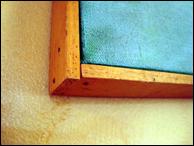
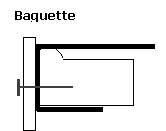
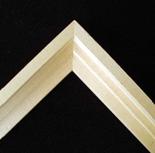
The practice of stripping was developed during that time in an attempt to help finish off the look of an unframed canvas. It is the application of thin wood strips ¼" to ⅜" thick fitted against the painting along the outside edge of the painting to add support to a lightweight stretcher (diagram 1). This type of frame trim is also called a baguette (photo 1).
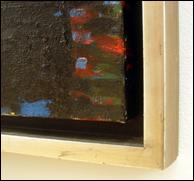
They are sometimes mitered, but most often butt joined and nailed directly into the strainer through the canvas. Unfortunately this type of frame offers little additional support and only serves as a slight visual improvement. The float frame as we know it today evolved from the baguette, but with more support and exterior protection, while also allowing for a float space between the outer moulding and the inner canvas (photo 2).
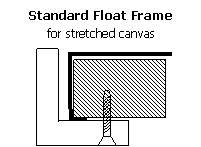
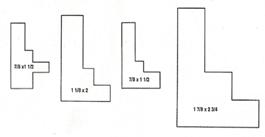
A step float frame has a built-in stair step profile with a set float space set by the design of the profile. The advantage of a step float is the built in float spacer in the profile (diagram 2). They vary with manufacturer and are available stained and unstained in many proportions.
Encaustic Originals
Contemporary encaustic art is created on paper, paper glued to rag board, plain 8-ply rag, Gatorboard, Luan (¼" mahogany plywood), Maple or Birch panels, Masonite, and even canvas applied to a rigid substrate. Encaustic originals may have more thickness than a painted watercolor on paper—up to ½" thick—or a sheer monoprint. Routine mounting options for these encaustic originals include: no frame; float frame, or sink mount frame. A popular choice when painting on cradled boxes is to either paint the sides or keep them clean and use no frame, much like the appearance of a deep gallery wrap canvas.
Although not using a frame is an economical alternative, it lacks the added support provided by a heavy float frame which helps prevent warping. Warping is a common problem with both encaustic cradles and stretched canvases, which must be addressed by the artist. The sale of a flat, unwarped original today does not mean it will not warp tomorrow. And if it warps at any time, it should remain the artist's problem once that original has been sold to a collector. Both correct cross bracing and framing can help alleviate—though may not prevent—future warping issues.
END
Copyright © 2010 Chris A Paschke
For more articles on mounting basics look under the mounting section in Articles by Subject.
There is a special section in the library for all past IEA Framing Matters articles from Wax-On!
Additional information on all types of mounting is found in:
The Mounting and Laminating Handbook, Second Edition, 2002,
The Mounting And Laminating Handbook, Third Edition, 2008 and
Creative Mounting, Wrapping, And Laminating, 2000 will teach you everything you need to know about getting the most from your dry mount equipment and materials as an innovative frame designer.
All books are available from Designs Ink Publishing through this website.
Chris A Paschke, CPF GCF
Designs Ink
Designs Ink Publishing
785 Tucker Road, Suite G-183
Tehachapi, CA 93561
P 661-821-2188
chris@designsinkart.com